
The problem
Search terms, locations and campaign settings were allowing budget to drift into irrelevant traffic. Tracking also made it difficult to separate useful enquiries from weak leads.
Four practical examples of how Wilmot AI finds wasted spend, maps SEO opportunities, improves landing pages and connects ads, SEO and web design into one operating rhythm. Every example is anonymised and excludes names, account IDs, login details, exact budgets and identifying information.
An anonymised UK service business had campaigns bringing in clicks, but enquiry quality was inconsistent and spend was being pulled into low-intent searches.

Search terms, locations and campaign settings were allowing budget to drift into irrelevant traffic. Tracking also made it difficult to separate useful enquiries from weak leads.
Wilmot reviewed search term patterns, flagged waste themes, tightened negative keyword priorities, checked conversion signals and prepared a change list for approval.
The account gained a cleaner optimisation rhythm, less avoidable spend and a clearer view of which searches deserved more attention in the next review cycle.
Client details stay anonymised, but the work pattern is specific: prompt, evidence, output and result.
An anonymised SME had useful services and local relevance, but the website did not make those opportunities easy for search engines or users to understand.

Important service pages were thin, internal links were inconsistent and several commercial search intents were not supported by dedicated page sections or FAQs.
Wilmot mapped priority queries to existing pages, recommended new page sections, improved headings, drafted FAQ content and connected related service pages with internal links.
The business received a practical SEO action map and implemented on-page improvements that gave key services clearer search intent, structure and conversion routes.
An anonymised landing page was receiving traffic from paid and organic sources, but the page made visitors work too hard before they could understand the offer or enquire.

The page had weak above-the-fold clarity, uneven mobile spacing, vague calls to action and limited proof near the decision points that mattered.
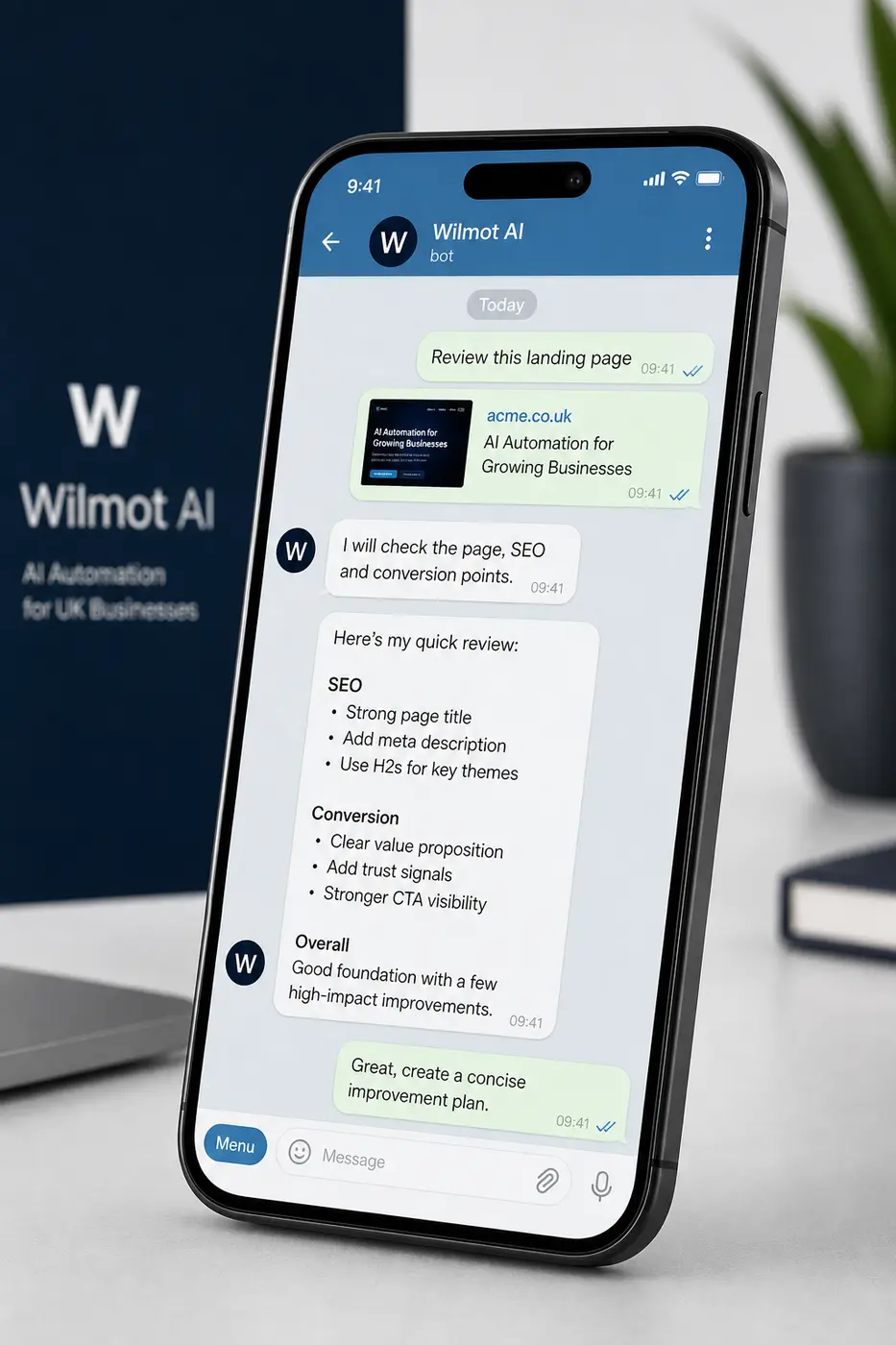
Wilmot rewrote the hero message, strengthened CTA placement, improved mobile layout, added clearer trust signals and prepared before-and-after evidence for review.
The page became easier to scan, more direct on mobile and better aligned with the search and advert promises that brought visitors there.
An anonymised UK SME needed ads, SEO and website improvements to work together rather than producing separate reports with separate priorities.

Paid search data, organic opportunities and website conversion issues were visible in different places, but nobody was turning them into one practical monthly action list.
Wilmot connected advert findings, search demand, landing page gaps and reporting signals, then prioritised fixes across traffic quality, page clarity, internal linking and tracking evidence.
The business moved from disconnected channel activity to a clearer loop: ads informed page fixes, website findings informed SEO, and reporting shaped the next month of work.
These examples are designed to show workflows and outcomes without exposing identifiable client information.

No. The examples are anonymised and do not include client names, account IDs, login details, exact budgets or identifiable business information.
Broad outcomes protect client privacy while still showing the type of problem, the work completed and the practical result.
Yes. Start with the Free Digital Marketing Audit and Wilmot can review your ads, SEO, website, tracking and next opportunities.
Send your website and the channels you care about. Wilmot AI will review the evidence and return a practical first action list.
No obligation. The audit checks your website, Google Ads, SEO foundations, tracking and next opportunities.
Use pricing and contact if you want to check scope, commitment or the best module before starting.